The Art of Emptying the Mind
Why we need the "empty bowl" today
We have been taught to fill. Fill the agenda, fill the pantry, fill the head with information, opinions, and worries. We run under the tacit premise that "more is better." But what happens when there is no room left? What happens when mental noise is so loud that we can no longer hear even our own thoughts?
Zen philosophy offers an ancient and radically current metaphor for these times of saturation: that of the bowl.
The tyranny of fullness
The fear of emptiness is universal. We are terrified of the pause, the silence, the blank page. We interpret stillness as a waste of time or, worse, as failure. However, in the Buddhist tradition, emptiness (Sunyata) is not a nihilistic absence, but a space of pure potentiality.
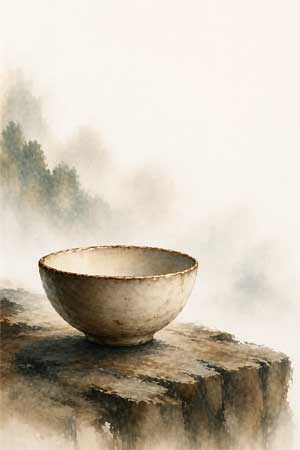
Think about it: a bowl is only useful because it is empty. If it were filled with hardened cement, you could not serve tea, rice, or water in it. Likewise, a mind saturated with prejudices, stress, and rigid certainties cannot learn, cannot create, and, above all, cannot listen.
The paradox of letting go to gain
In my book "Empty Bowl or Full Bowl", I explore this duality. We often believe that wisdom consists of accumulating knowledge like collecting stamps. But true wisdom lies in the ability to let go of what no longer serves us to make space for the new.
- Letting go of control: Stopping the attempt to dominate every unpredictable variable in our lives.
- Letting go of rigid identity: Allowing ourselves to be fluid, adaptable, like water.
- Letting go of judgment: Observing reality as it is, not as we want it to be.
Small practices to empty the bowl
You don't need to retreat to a monastery to start applying this philosophy:
1. The conscious pause: Before responding to a difficult email or starting a complex task, stop for ten seconds. Breathe. Empty the previous intention.
2. Active listening: When someone speaks to you, try not to prepare your response while they are talking. Listen from emptiness, without prior judgments.
3. The tea ritual: Prepare a hot drink and drink it without doing anything else. No mobile phone, no television. Just you, the aroma, and the warmth in your hands.
This reflection is just the beginning. In "Empty Bowl or Full Bowl" I delve deeper into how this ancient wisdom can transform your day-to-day life, offering practical tools to navigate modern complexity with serenity and clarity.
Inspired by the teachings of
"Empty Bowl or Full Bowl"