The Art of Emptying the Mind
We have been taught to fill. Fill the agenda, fill the pantry, fill the head with information. A reflection on why we need inner spaces.
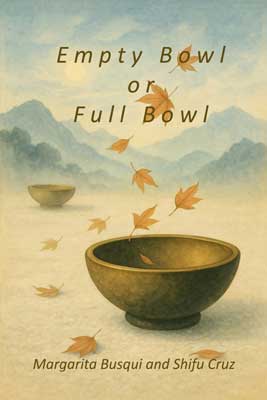
Read article →The first thing that strikes the reader is the redefinition of poverty and emptiness. In our society, emptiness is experienced as a flaw, as something that must be urgently filled with consumption, noise, likes, or certainties. The book tells the reader: "Your emptiness is not a mistake, it is your capacity." By seeing Liang accept his empty bowl not with shame, but as the only valid tool to receive, the reader feels immediate relief. They allow themselves not to know, not to have, not to be full of answers.
Many spiritual books speak from the clouds. This one speaks from the mud, the cold, and the back pain. The idea reaches the reader that enlightenment is not an ethereal state, but a way of sweeping, carrying water, and eating cold rice. This deeply connects with those who find traditional meditation abstract or unreachable. The book teaches that their daily life—washing dishes, attending to a difficult child, working in a gray office—is their temple.
Liang’s process of losing his name ("Entering without name") resonates as a powerful echo in the contemporary reader, trapped in their professional, social, or family labels. The reflection that arises is: Who am I when no one is watching? The book invites the reader to let go of that armor. It hurts, as it hurts Liang, but then comes the lightness. It is an invitation to radical authenticity, far from the spiritual or social ego.
The encounter with the sick child (Kai) and the market child (Yen) changes the reader's perspective on help. The uncomfortable but necessary idea arrives that sometimes we help to feel superior or to avoid looking at our own wounds. But it also offers a way out: true compassion is sitting on the ground with the other, sharing silence and a piece of cookie, without trying to "save" them. This takes enormous pressure off.
The tiger scene is not about fighting, it is about embracing. For a Western reader, accustomed to overcoming, surpassing, and conquering, this is perhaps the most disruptive lesson. The message arrives: What you fear, what you hide, your rage, your fear, are not enemies to be exterminated. They are parts of you waiting to be recognized. The book teaches you to stop fighting against yourself. To integrate your "tiger." This generates a deep inner peace.
The closing, with Liang leaving the temple without a map, leaves the reader with a sensation of vertiginous freedom. There is no final goal ("enlightenment"). There is a walking. The final reflection that remains etched is: Security is an illusion. True faith is walking without a map, trusting that each step shapes you. For someone anxious about the future, this is a balm.
It is a book that does not shout, but leaves a silent hum in the chest for days. A reminder that purity is not in avoiding the mud, but in not becoming mud when touching it.
We have been taught to fill. Fill the agenda, fill the pantry, fill the head with information. A reflection on why we need inner spaces.
Read article →How repetitive and "minor" tasks are actually the hardest training ground for the mind and presence.
Read article →When fear stops being an enemy. An invitation to integrate our shadow and recognize it as a source of vitality.
Read article →